
 Flooring
 Rugs
SPC & Vinyl Flooring Dubai: Is It Actually a Good Alternative to Wood?


Wood and parquet flooring still get most of the attention in Dubai homes, and for good reason — we’ve covered why in our flooring guide and parquet flooring guide before. But SPC and vinyl flooring have quietly become one of the more requested alternatives over the past year, particularly for kitchens, bathrooms, and rental properties where wood isn’t always the practical choice.
If you’ve seen the term “SPC flooring” without knowing exactly what it means, here’s the honest breakdown of what it is, where it beats wood, and where it genuinely doesn’t.
What SPC Flooring Actually Is
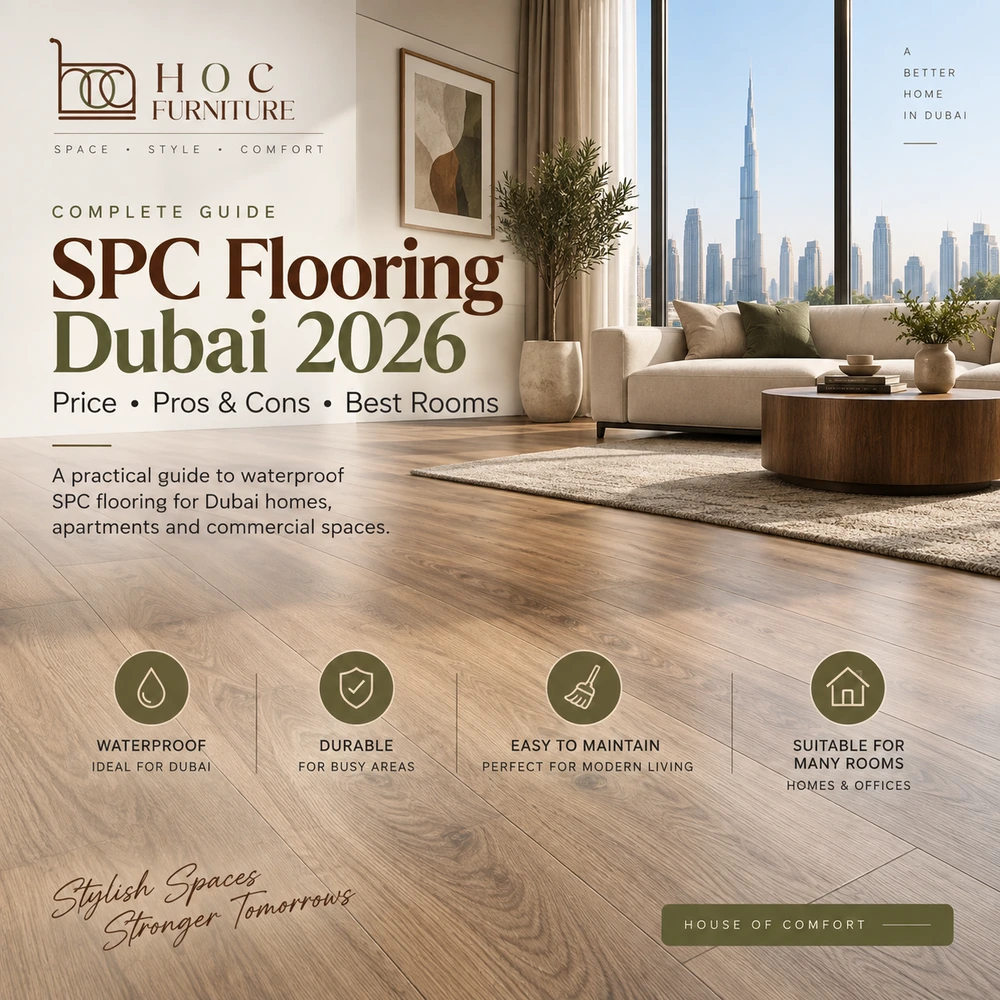
SPC stands for stone plastic composite — a rigid core flooring made from limestone powder and stabilizers, topped with a printed design layer and a wear-resistant coating. It’s a step up structurally from standard vinyl flooring, which uses a softer, more flexible core.
The rigid core is the part that matters most practically: it makes SPC far more resistant to dents and temperature-related expansion than softer vinyl, which is part of why it’s held up well in a climate that swings between blasting AC and outdoor heat throughout the day.
SPC vs Standard Vinyl — They’re Not the Same Thing
People often use “vinyl flooring” as a catch-all term, but there’s a real difference between the two.
Standard vinyl (sometimes called LVT, luxury vinyl tile) has a softer, more flexible construction. It’s generally cheaper and easier to install, but it’s more prone to denting under heavy furniture and can show subfloor imperfections through the surface over time.
SPC has a rigid limestone-composite core, which makes it more dimensionally stable — less prone to expanding or contracting with temperature changes, and better at bridging minor subfloor unevenness without it showing through the surface. It typically costs more than standard vinyl but less than solid wood or engineered parquet.
If budget allows, SPC is generally the better long-term choice for high-traffic areas specifically because of that rigid core — standard vinyl tends to make more sense for lower-traffic rooms where the cost saving matters more than long-term dent resistance.
Where SPC and Vinyl Genuinely Outperform Wood
Water resistance. This is the single biggest practical advantage. SPC and vinyl are far more tolerant of moisture than solid or engineered wood, which makes them a realistic option for kitchens, laundry areas, and bathrooms — spaces where wood flooring needs careful sealing and ongoing maintenance to avoid warping.
Temperature stability. Wood expands and contracts with heat and humidity shifts, which matters in homes where AC gets switched off for extended periods (a holiday home, or an apartment left empty over summer). SPC’s rigid core handles these swings with noticeably less movement.
Lower maintenance. No sanding, no periodic refinishing, no sealant reapplication — SPC and vinyl are largely wipe-clean, which is a real time saving over the life of the floor compared to solid wood.
Cost for rental and investment properties. For landlords furnishing a rental unit, SPC often makes more financial sense than solid wood, since it holds up to tenant turnover and varied care standards better without the same risk of costly refinishing between tenancies.
Where Wood Still Wins
Nothing about SPC or vinyl replicates the actual feel and acoustic quality of solid or engineered wood underfoot — it’s a genuinely different experience, not just a visual one, and clients who’ve lived with real wood flooring tend to notice the difference quickly.
Resale value is the other consideration. In villas and higher-end apartments specifically, solid wood or good engineered parquet is still generally viewed as the more premium finish, and it’s worth factoring that into the decision if resale value matters more to you than day-to-day practicality.
What Actually Affects SPC and Vinyl Pricing
- Wear layer thickness — a thicker wear layer resists scratching and denting longer, and is the main driver of price difference between budget and premium SPC ranges.
- Core thickness and density — thicker cores feel more substantial underfoot and handle furniture weight better, but cost more per square metre.
- Design layer quality — higher-end SPC uses more realistic wood-grain printing and embossed texture that matches the visual grain, rather than a flat printed pattern that looks obviously synthetic up close.
- Underlay and subfloor prep — similar to carpet, an uneven or poorly prepped subfloor affects the final result regardless of how good the SPC itself is, and proper prep is often where budget installs cut corners.
Installation — What to Check Before You Commit
SPC flooring is typically installed as a floating floor, click-locked together without adhesive, which makes installation faster than solid wood in most cases. That said, subfloor flatness still matters — even a rigid core floor will show unevenness over time if it’s installed over a subfloor that wasn’t properly leveled first.
For larger spaces, ask specifically about expansion gaps around the room’s perimeter. Even though SPC is more temperature-stable than wood, it still needs a small expansion allowance at the edges, and skipping this is a common shortcut in rushed installations that shows up as buckling months later.
Frequently Asked Questions
Is SPC flooring waterproof or just water-resistant? Most SPC flooring is fully waterproof at the surface and core level, though standing water at seams over extended periods can still eventually cause issues — it’s not a substitute for proper waterproofing in wet areas like showers.
Does SPC flooring feel cold underfoot like tile? Less so than tile, since the composite core doesn’t conduct heat away from your feet as quickly, though it’s still generally cooler underfoot than solid wood.
Can SPC flooring be installed over existing tile? In many cases yes, provided the existing tile is flat, secure, and free of significant unevenness — it’s worth having the subfloor assessed first rather than assuming it’s suitable.
How does SPC flooring compare to parquet on cost? SPC generally costs less than solid or engineered parquet flooring per square metre, though the gap narrows with premium SPC ranges that use thicker wear layers and higher-quality design printing.
Weighing SPC or vinyl against wood or parquet for your space? Browse our flooring range to compare finishes directly, or read our wooden and parquet flooring guide alongside this one before deciding.