

 Flooring
 Rugs
Rattan vs Cane vs Wicker: What’s the Difference, and Which Should You Buy in Dubai?

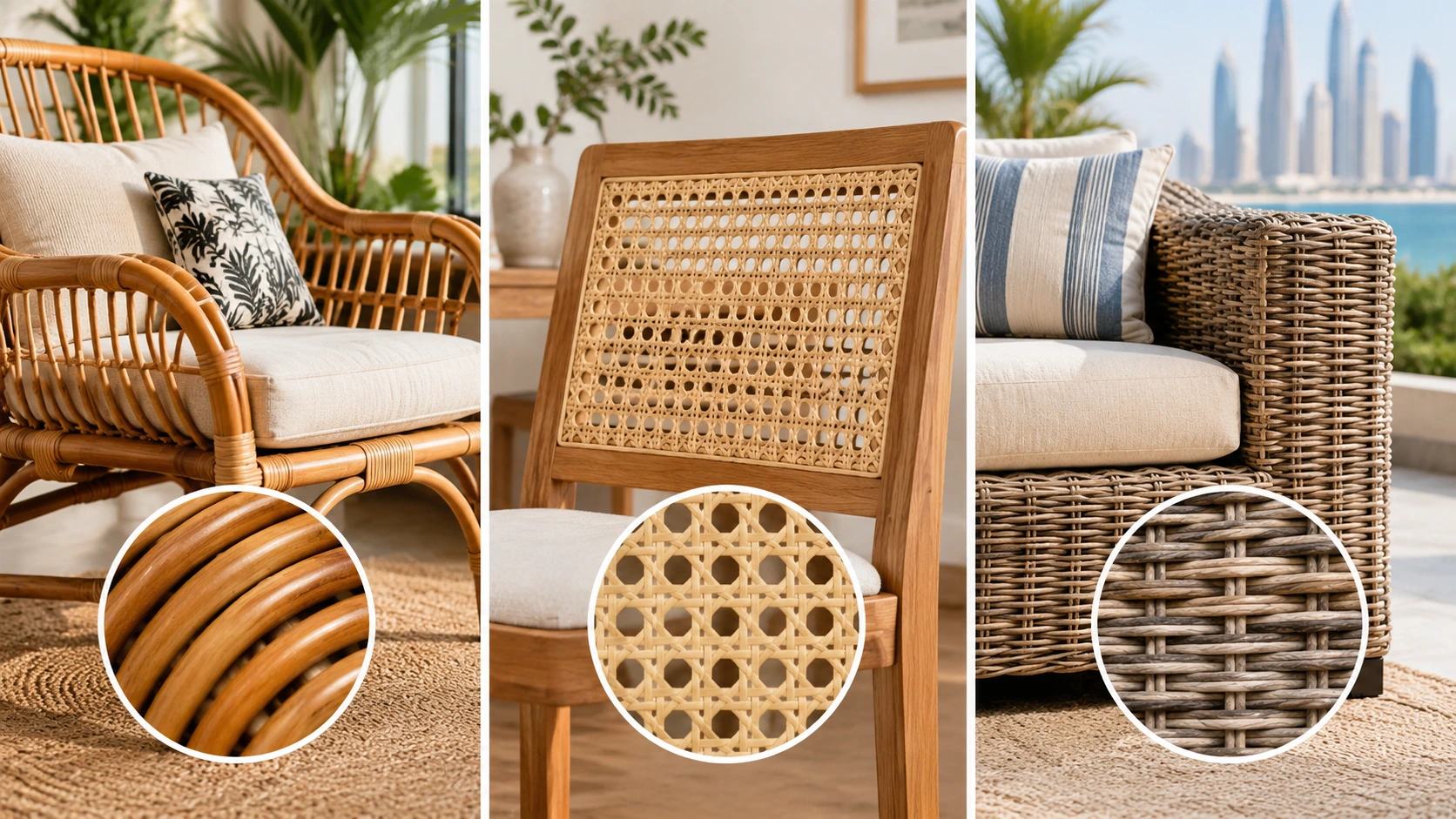
Walk into any furniture showroom in Dubai and you will hear the three words used as if they mean the same thing. A salesperson calls a bed “rattan”, the label says “cane”, and the garden set on the balcony is “wicker”. It is no surprise that most buyers end up confused, and confusion costs money, because the three behave very differently once they are in your home.
Here is the short version before we go deeper: rattan is a plant, cane is a part of that plant, and wicker is a way of weaving. Once that clicks, choosing cane furniture in Dubai gets much easier. This guide explains each one in plain language, how they cope with our heat, AC and dust, and which suits which piece of furniture.
The Quick Answer: Rattan, Cane and Wicker in One Minute
- Rattan is a climbing palm that grows in tropical forests. Its solid stems are harvested and used to build furniture frames.
- Cane is the thin, smooth outer skin peeled from the rattan stem, split into strips and usually woven into sheets.
- Wicker is not a material at all. It is a weaving technique that can use rattan, bamboo, willow or synthetic resin.
So a chair can be a rattan chair with a cane seat, woven in a wicker style. All three words can be true of the same piece.
What Is Rattan?
Where Rattan Comes From
Rattan grows as a vine, climbing up through trees in the rainforests of Southeast Asia. Unlike bamboo, which is hollow, the rattan stem is solid. It is also strong and flexible, which is why it can be steamed and bent into curves without cracking. That bendability is what gives rattan furniture its soft, rounded character and why it works so well for headboards, chair backs and arched frames.
Rattan Poles vs Rattan Core
When people say “rattan furniture”, they usually mean pieces built from the solid pole, which forms the visible frame. Inside the stem sits the core, sometimes called reed, which is cut into round or flat strands and used for weaving. Poles give the structure. The core and the cane give the texture.
You will see this in beds especially. A solid rattan bed frame uses thick poles for strength and often finishes the headboard with woven detailing. Our Nellie Rattan Bed is a good example of how the same material can look quite different in the room. If you are comparing beds more broadly, our rattan bed guide covers sizing and styling.
What Is Cane?
Rattan Cane: The Outer Skin
Cane is what you get when the glossy outer layer of the rattan stem is stripped off in long, thin ribbons. Because it comes from the very outside of the plant, it is smooth, pale and dense. Craftspeople dry it, sort it and then weave it. “Rattan cane” is simply the full name for this skin.
Rattan Webbing and Rattan Mesh
Most cane used in furniture today comes as rattan webbing: pre-woven sheets in an open pattern, sometimes called rattan mesh. These sheets are cut to size and fitted into frames, which is how you get the classic woven panels on wardrobe doors, cabinet fronts and chair backs. The look is light and airy because the weave leaves small openings, so a cane door softens a big piece of furniture instead of making it feel heavy.
One popular pattern is the radio weave, a tight, regular, almost fabric-like finish. You can see it on our radio woven rattan page. For a closer look at cane fronts on storage, our cane and rattan wardrobes guide explains how the weave is fitted and what to check before you order.
What Is Wicker?
Wicker Is a Weaving Method
Wicker describes how something is woven, not what it is woven from. Think of a basket: the over-and-under pattern of strands around upright stakes is wicker work. Traditional wicker can use rattan, willow, bamboo or reed. Because the word describes the technique, you can have rattan wicker, willow wicker or plastic wicker, and they are very different products.
Natural Wicker vs Synthetic Wicker
This is the distinction that matters most in the UAE. Natural wicker is made from plant fibres and is meant for indoor use. Synthetic wicker, usually a resin or polyethylene strand woven over an aluminium frame, is built to handle sun, rain and humidity. When someone sells a balcony or garden set as wicker, it is almost always synthetic. Our outdoor furniture care guide explains how to look after outdoor sets in our climate.
Rattan vs Cane vs Wicker: Side-by-Side Comparison
| Rattan | Cane | Wicker | |
|---|---|---|---|
| What it is | A climbing palm; solid stems | The outer skin of the rattan stem | A weaving technique |
| Typical use | Frames, headboards, legs | Woven panels, door fronts, seats | Chairs, baskets, outdoor sets |
| Look | Natural, rounded, textured | Fine, open, airy weave | Chunky or fine, depending on strand |
| Best location | Indoors | Indoors | Indoors (natural) or outdoors (synthetic) |
| Sun and moisture | Keep away from direct sun | Avoid damp and direct sun | Synthetic copes with weather; natural does not |
How Each Holds Up in Dubai’s Climate
Air-Conditioned Interiors
Indoors, natural rattan and cane live comfortably. A steady air-conditioned room is far kinder to them than outdoor weather. The one thing to watch is very dry air: cane and rattan lose moisture over time, so a piece sitting directly in the path of a cold AC vent will dry out faster than one on a side wall.
Sun, Heat and Humidity
Strong direct sunlight is the main enemy. It fades the colour and makes the fibres brittle, which is why natural rattan and cane should not sit against a sun-baked window or on an uncovered balcony. Humidity swings matter too. Sustained damp can lead to mould or loosened weaving, which is common on balconies and in poorly ventilated spaces.
Dust
Dust settles into the weave of cane and the grooves of rattan. It is not damaging, but it does show up, so a quick weekly brush keeps pieces looking fresh. We cover the full care routine below.
Which One Suits Which Piece of Furniture?
Beds and Headboards
Rattan is the natural choice here because the solid poles give strength and curves. A rattan bed frame looks relaxed and warm and pairs well with neutral bedding. It works in kids’ rooms and adult bedrooms alike. If you want something more contemporary, a cane headboard panel gives a lighter, more tailored look.
Wardrobes, Cabinets and Sideboards
This is where cane shines. A cane door insert breaks up a large flat surface and lets air move through, which is useful in storage. Our Wren Cane Wardrobe shows how woven fronts can sit on a solid frame without feeling fragile.
TV Units and Media Furniture
A rattan TV unit is one of the fastest-growing requests we see, and it is easy to understand why. A woven or cane-fronted unit softens the harsh black rectangle of a television wall. Have a look at the Rattan Oak TV Stand and the Classic Rattan TV Unit to compare styles.
Sofas, Dining Pieces and Desks
Cane and rattan accents lift seating and tables without overwhelming a room. A piece like the Tanner Cane Sofa uses woven detail as an accent rather than the whole story, which tends to age well. The same idea works on dining tables, desks, stools and nightstands. Smaller accents are an easy way to try the look without committing to a large piece.
Outdoor Spaces
For anywhere that sees direct sun or rain, choose synthetic wicker on an aluminium frame, not natural rattan. If a supplier calls a garden set “natural rattan”, ask exactly what it is made of and what finish protects it.
How to Spot Good Quality Rattan and Cane Furniture
A few quick checks separate a piece that will last from one that will not:
- Frame material: the structure behind the weave should be solid wood or sturdy engineered board, with rattan as the finish and decoration, not the hidden skeleton.
- Weave tightness: an even, tight weave holds its shape. Gaps, loose ends and uneven spacing signal rushed work.
- Finish and sealing: look for a smooth, even coat with no sticky or rough patches. A good seal helps resist dust and moisture.
- Edges and joints: where cane meets the frame, the binding or trim should be neat and secure. This is where wear shows first.
- Origin and treatment: ask where the rattan comes from and how it was dried and treated. Properly dried material resists pests and cracking.
Custom Rattan and Cane Furniture in Dubai
Because cane and rattan are worked by hand, they suit made-to-measure furniture very well. Standard sizes rarely fit an odd alcove, a long wall or a built-in wardrobe space. If you want a specific weave, finish or dimension, made-to-order furniture in Dubai is usually the better route than buying off a showroom floor. Our workshop in Al Quoz builds custom pieces, and you can read how the process works in our custom furniture guide.
If you need rattan or cane material itself, for a project or a trade order, see our rattan and cane supplier page, or our overview of rattan supply in the UAE.
Caring for Rattan and Cane Furniture
- Dust weekly with a soft brush or a dry cloth, getting into the weave.
- Use a barely damp cloth for marks, then dry immediately. Do not soak cane.
- Keep pieces out of constant direct sun and away from AC vents blowing directly onto the surface.
- Avoid standing or sitting on cane panels that are not designed for it.
- If cane loosens or sags, get it repaired early. Small repairs are simple, large ones are not. Our team handles this through our furniture repair service in Al Quoz.
Frequently Asked Questions About Rattan, Cane and Wicker
Is rattan the same as cane?
No. Rattan is the whole plant stem. Cane is the thin outer skin stripped from that stem and woven into sheets or webbing.
Is wicker a material?
No, wicker is a weaving technique. It can be made from rattan, bamboo, willow or synthetic resin, and the material decides how durable it is.
Is rattan furniture good for Dubai?
Yes, indoors. In air-conditioned rooms away from direct sun it performs well. Avoid placing natural rattan on uncovered balconies.
Can I use rattan or cane furniture outside?
Natural rattan and cane are meant for indoors. For outdoor use, choose synthetic wicker on an aluminium frame, which resists sun and moisture.
What is rattan webbing?
Rattan webbing, also called rattan mesh, is cane woven into a ready-made sheet with an open pattern. It is cut to size and fitted into doors, panels and seats.
How long does rattan furniture last?
With good construction, indoor use and basic care, it can last many years. Quality of the frame, weave and finish matters more than the material name.
Can rattan or cane furniture be made to measure?
Yes. Beds, wardrobes, TV units and cabinets can all be made to your size, weave and finish, which is often the best way to fit a tricky space.
Explore Our Rattan and Cane Collection
Seeing the weave in person is the best way to decide. Browse our full rattan and cane collection, or get in touch with HOC Furniture to visit the Al Quoz showroom and discuss a custom piece for your home.


