
Custom Carpets Dubai: A Buying Guide for Homes & Offices

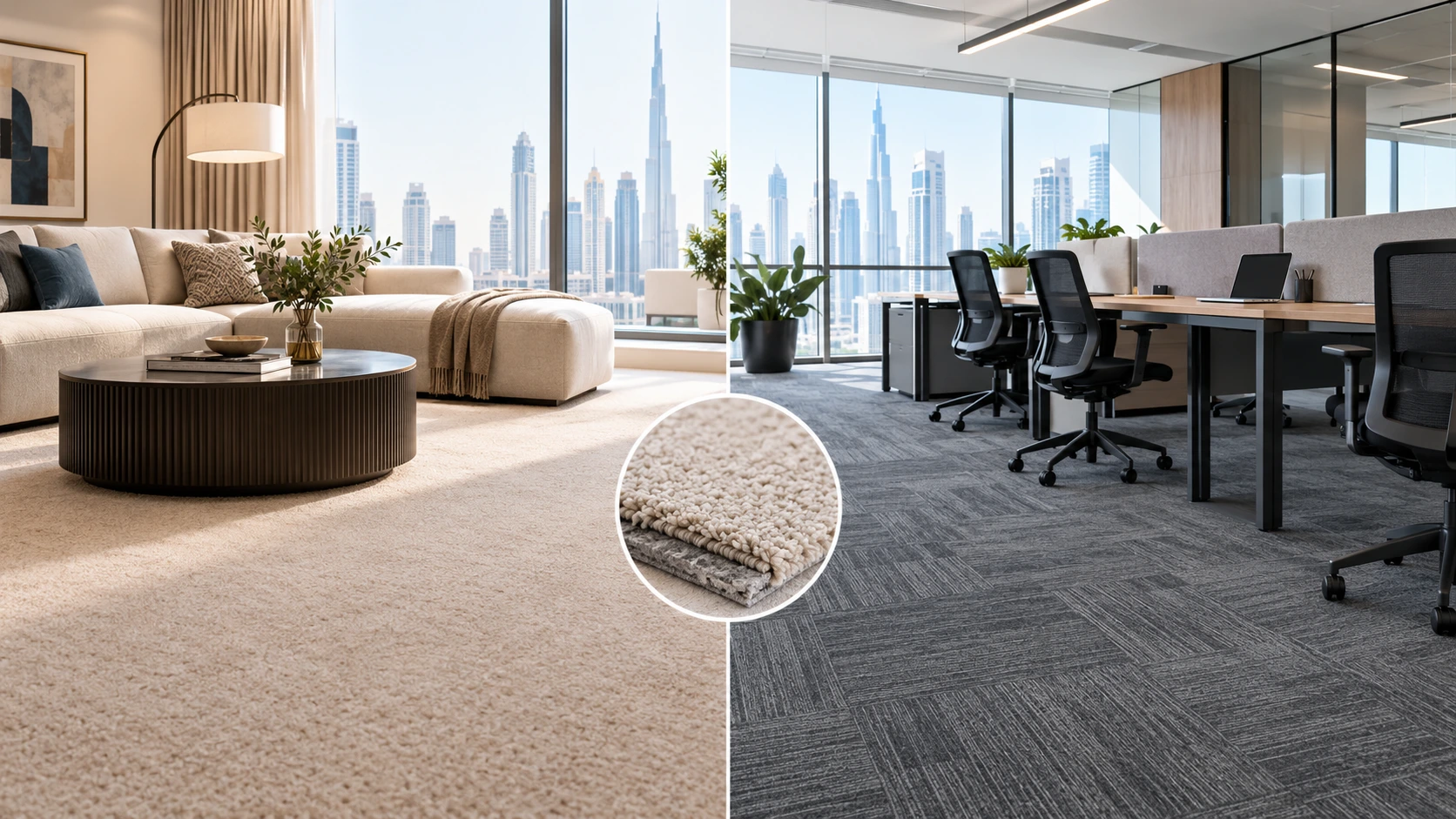
Carpet is one of those purchases people tend to treat as an afterthought — pick a rug, roll it out, done. Custom carpet is a different decision entirely. Whether it’s wall-to-wall for a majlis, a fitted runner for a hallway, or full-floor coverage for an office, getting it right means thinking about a few things most people don’t consider until after installation, when it’s too late to fix cheaply.
Here’s what actually matters if you’re weighing custom carpet for a home or a commercial space in Dubai.
Custom vs Off-the-Shelf: What’s Actually Different
A standard carpet or rug comes in fixed sizes and a fixed pattern repeat. Custom carpet is cut, and sometimes woven, to your exact room dimensions — which matters more than it sounds like it should.
Dubai apartments and villas rarely have perfectly rectangular rooms. Bay windows, staircases, columns, built-in storage — all of it throws off standard sizing. A custom carpet is measured and fitted around these features instead of leaving an odd gap or requiring you to trim a standard roll yourself, which almost always shows at the seams.
For offices, the difference is even more practical. Commercial spaces need carpet tiles or broadloom that can be laid around cable routing, workstvisions, and partition walls — something off-the-shelf residential carpet isn’t built for.
Material Choice Matters More in This Climate Than People Expect
Dubai’s combination of heat, dust, and near-constant AC use is harder on carpet than most people realize before they’ve lived with a bad choice for a year.
Wool is the standard for residential custom carpet here — it’s naturally dust-resistant, holds colour well, and doesn’t flatten as quickly under furniture as synthetic fibres do. It costs more upfront but tends to outlast cheaper alternatives by several years.
Nylon and polypropylene blends are the more budget-friendly option and work reasonably well for lower-traffic rooms, but they show wear faster in high-footfall areas and can develop static in dry AC conditions — worth testing a sample under your own AC setup before committing to a full room.
Carpet tiles dominate the office market for a reason: individual tiles can be replaced if one section wears out or gets stained, instead of pulling up the entire floor. For a busy office, this alone often justifies the choice over broadloom.
One thing that catches people off guard: darker carpets show dust build-up less visibly day-to-day but actually trap more heat near windows with direct sun exposure, which can affect how the room feels in peak summer months. Lighter, tightly-woven wool tends to be the more comfortable practical choice for south- or west-facing rooms.
If you’re still deciding between carpet and a hard floor finish for the same room, it’s worth browsing our flooring range — parquet and vinyl both handle Dubai’s climate differently than carpet does, and seeing the actual finishes side by side makes the trade-offs clearer than reading about them.
Sizing and Measurement — Where Most Mistakes Happen
Wall-to-wall custom carpet needs precise measurement of the actual room, not the floor plan dimensions from your building’s brochure — these are rarely exact once skirting boards, door frames, and built-in furniture are accounted for.
For a fitted carpet, get someone to measure on-site rather than working from your own tape measure figures. Small errors compound at corners and around fixed obstacles like columns or stair edges, and a carpet cut even a centimetre short at a wall is a visible problem, not a minor one.
For offices, factor in furniture layout before ordering carpet tiles — if desks or partitions are likely to move within the next year or two, plain or subtly patterned tiles age better than bold directional patterns, which show wear differently once furniture repositions and traffic patterns shift.
What Drives the Cost
A few factors genuinely move the price on custom carpet, beyond just the material:
- Room shape complexity — more corners, alcoves, and obstacles mean more cutting and fitting labour, not just more material.
- Underlay quality — a good underlay extends carpet lifespan significantly and improves how it feels underfoot, but it’s often the first thing cut from a quote to bring the price down. Worth asking specifically what underlay is included.
- Pile height and density — denser, higher-pile wool carpet costs more per square metre but resists flattening under furniture and heavy foot traffic far better than lower-density options.
- Installation complexity — stairs, especially curved ones, take considerably longer to fit than flat open rooms and should be priced separately in any quote you’re comparing.
If two quotes for the same room size come back with a large price gap, the difference is almost always underlay quality or pile density — both are easy to miss when comparing numbers on paper.
Home vs Office Carpet — Different Priorities
For a home, comfort and appearance usually lead the decision — how it feels underfoot, how it photographs, how it complements the rest of the room.
For an office, the priorities flip. Durability under daily rolling-chair traffic, ease of spot-replacement, and fire-safety ratings become the deciding factors, and commercial-grade carpet tiles are built specifically for this — tested for wear ratings that residential carpet simply isn’t rated for. If you’re outfitting a commercial space, it’s worth asking directly for the commercial wear rating rather than assuming a “durable” residential product will hold up the same way under office conditions. If the carpet is part of a wider office fit-out, our office desk collection is worth a look at the same time, since desk layout and carpet tile placement are usually planned together.
Looking After It Once It’s Down
- Vacuum at least twice a week in high-traffic areas — dust that isn’t lifted regularly works its way into the fibres and accelerates wear from the inside.
- Deal with spills immediately rather than letting them sit; blot rather than rub, which pushes the stain deeper into the pile.
- Professional deep cleaning every 12–18 months keeps wool carpet looking new far longer than spot-cleaning alone.
- Rotate furniture position occasionally where possible — carpet compresses permanently under legs and feet that never move.
Frequently Asked Questions
How long does custom wool carpet last in a Dubai home? With regular vacuuming and periodic professional cleaning, good-quality wool carpet typically holds up well for 10–15 years before it needs replacing, depending on foot traffic.
Are carpet tiles a good option for a home office? Yes — carpet tiles work well for home offices specifically because they handle rolling office chairs better than most residential broadloom and allow easy replacement of a worn section without redoing the whole room.
Is custom carpet more expensive than buying a standard rug? Per square metre, custom fitted carpet usually costs more than an off-the-shelf rug of the same material, but it eliminates the gaps, trimming, and awkward sizing that come with fitting a standard roll into an irregular room.
Can custom carpet be installed over existing flooring? In most cases, yes, provided the existing floor is flat, dry, and structurally sound — though it’s worth having the surface checked before installation, since uneven subflooring will telegraph through the new carpet over time.
Planning custom carpet for a home or office in Dubai? HOC Furniture measures, sources, and fits carpet as part of our broader interior design service — if you’re also weighing flooring options for the same space, our flooring guide is a useful next read.




