
Korean Wallpaper Dubai: Why Homeowners Are Switching (And What to Know Before You Do)

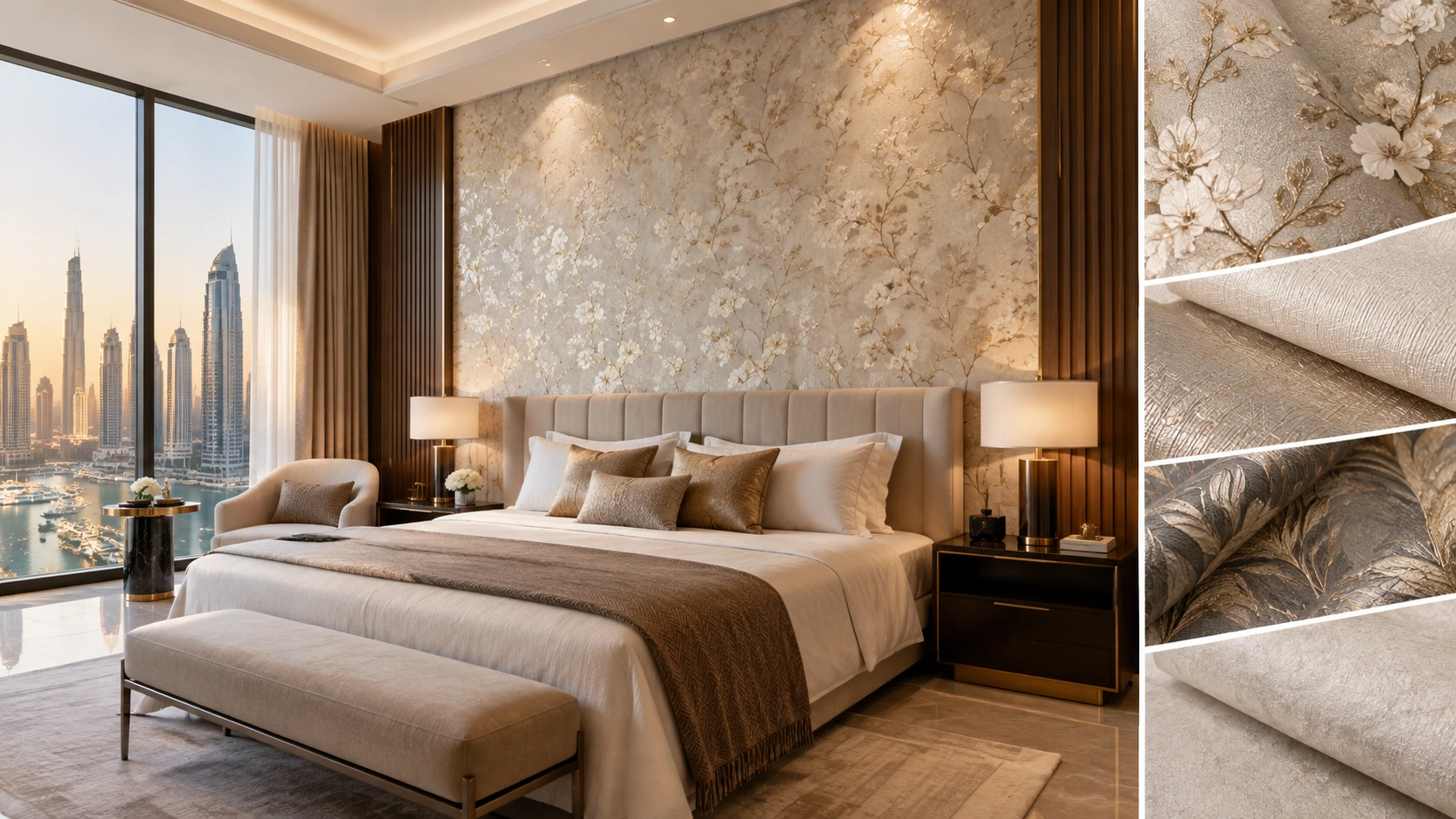
Walk into any newly renovated apartment in Dubai Marina or a villa in Arabian Ranches these days, and there’s a decent chance one wall is wearing Korean wallpaper instead of paint. It’s not just a passing trend — the material itself solves a few real problems that regular wallpaper and paint don’t, especially in a climate like ours.
If you’re weighing it up for your own home, here’s the honest breakdown: what Korean wallpaper actually is, where it makes sense, where it doesn’t, and how to avoid the mistakes we see most often when people install it themselves or hire the wrong contractor.
What Makes Korean Wallpaper Different
Most wallpaper sold in Dubai falls into two camps: cheap PVC rolls that yellow within a couple of years, or European wallpaper that’s beautiful but wasn’t really designed with 45°C summers and constant AC cycling in mind.
Korean wallpaper sits in a different category. It’s typically made from a non-woven base with a silk or embossed vinyl top layer, which gives it three practical advantages:
- It breathes. Unlike solid vinyl wallpaper, non-woven backing lets moisture pass through instead of trapping it against the wall — which matters a lot in AC-heavy homes where condensation on interior walls is a real issue.
- It’s thicker and more forgiving. Korean wallpaper hides minor wall imperfections (hairline cracks, uneven plaster) far better than thin paper does, so you’re not paying extra for wall prep in older buildings.
- The finishes go further. Embossed textures, subtle metallic threads, 3D floral or geometric patterns — the kind of detail that photographs well and doesn’t look flat under downlights.
That said, it isn’t automatically the right choice for every wall. If your home gets direct, prolonged sunlight through floor-to-ceiling windows, even good wallpaper will fade faster than paint — worth factoring in before you commit a full room.
Where It Actually Works Well in a Dubai Home
Bedroom accent walls. This is the single most common request we get. One wall behind the headboard, usually a soft textured or muted floral Korean wallpaper, paired with plain paint on the remaining three walls. It reads as intentional rather than overwhelming.
Majlis and formal living areas. Darker, richer patterns — think deep emerald, burgundy, or gold-toned geometric designs — work particularly well here because these rooms usually get less direct daylight, so colour retention isn’t as much of a concern.
Powder rooms and hallways. Smaller spaces are where bolder Korean wallpaper patterns actually shine, since you’re not living with a large-scale pattern day in and day out — it’s more of a statement moment.
Kids’ rooms. Washable, low-VOC Korean wallpaper is a genuinely good fit here, since it can handle the occasional crayon incident without the wall needing a full repaint.
Where we’d steer clients away from it: kitchens (grease and steam exposure over time), and any wall that gets hit by direct sun for more than a few hours a day.
Silk, Embossed, or 3D — How to Pick a Finish
There isn’t one “correct” type of Korean wallpaper — it depends on the room and how much visual weight you want on that wall.
- Silk-finish wallpaper has a subtle sheen and works well in bedrooms where you want texture without a busy pattern competing with other decor.
- Embossed/textured wallpaper adds a tactile, almost fabric-like feel and is forgiving on imperfect walls — a good pick for older units.
- 3D floral or geometric patterns are the boldest option and suit accent walls specifically, not full-room coverage, unless the room is genuinely large.
A rule of thumb we give clients: if the room is under 15 square metres, go with a smaller-scale pattern or a plain textured finish. Large, busy patterns in small rooms tend to make the space feel tighter rather than more elevated.
What Actually Affects the Cost
Pricing for Korean wallpaper in Dubai varies based on a few genuine factors, not just the design you pick:
- Wall prep required — a freshly plastered wall costs less to prep than one with old paint, cracks, or a previous wallpaper layer that needs stripping.
- Pattern matching — patterns with a repeat (especially large florals or geometric prints) need more material and more careful cutting to align seams, which adds to both material and labour cost.
- Room shape — walls with lots of corners, window recesses, or curved sections (common in some Dubai apartment layouts) take longer to install cleanly than a single flat wall.
- Material grade — silk-finish and imported premium ranges cost more per roll than standard textured options.
If a quote seems unusually low, it’s worth asking directly whether it includes wall prep and pattern matching — those two line items are where budget installs cut corners, and it shows within the first year.
Installation Is Where Most Problems Actually Happen
Korean wallpaper itself is a durable product. The issues we get called about — bubbling, peeling at seams, visible pattern misalignment — are almost always installation problems, not material defects.
A proper install involves measuring the wall precisely (including outlets, switches, and trim), prepping the surface so it’s smooth and dry, and applying the paper with the right adhesive for a non-woven backing, which behaves differently from standard paste-the-paper wallpaper.
At HOC Furniture, our team handles this end to end — from an on-site measurement visit through to the final install — because getting the seams and pattern alignment right the first time is genuinely difficult to fix after the fact without redoing the whole wall.
Looking After It Once It’s Up
Korean wallpaper is low-maintenance but not zero-maintenance:
- Wipe with a slightly damp microfibre cloth — avoid soaking the seams, since moisture pooling at the joints is what eventually causes lifting.
- Keep it out of direct, sustained sunlight where possible; even fade-resistant finishes will shift colour over several years under constant UV exposure.
- For textured or embossed finishes, a soft dry brush works better than a cloth for dust — it won’t flatten the texture over time.
Frequently Asked Questions
Is Korean wallpaper waterproof? It’s moisture-resistant and washable, but not fully waterproof — which is why we don’t recommend it for kitchens or areas with direct water exposure like bathrooms.
How long does Korean wallpaper last in Dubai’s climate? With proper installation and away from direct sun, well-maintained Korean wallpaper typically holds up for 7–10 years before colours or texture start to show wear.
What’s the difference between Korean and Chinese wallpaper? The main difference is usually manufacturing quality control and the non-woven backing weight — Korean wallpaper generally uses a thicker, more consistent base, which is part of why it handles humidity and minor wall imperfections better.
Can Korean wallpaper be installed over existing wallpaper? Not recommended. Installing over old wallpaper traps moisture underneath and shortens the lifespan of the new layer significantly — proper removal and prep first is worth the extra step.
Looking to get Korean wallpaper installed properly the first time? HOC Furniture’s interior team handles measurement, custom cutting, and installation across Dubai — get in touch for a site visit.




